The modern cafe is no longer just about the caffeine fix. It’s a sanctuary, a third place, and increasingly, a workspace. As the line between work and life blurs, two distinct cafe models have emerged, each with a fundamentally different purpose and revenue structure: the Coworking Cafe and the Community Space Cafe.
If you’re conceptualizing a new project, understanding this distinction is the key to achieving profitability and delivering on your brand promise.
1. The Coworking Cafe: Engineered for Productivity
The Coworking Cafe (or Work Cafe) is a hybrid model designed to serve the needs of the modern remote worker, freelancer, and digital nomad. Its primary goal is to monetize quiet hours and provide reliable professional infrastructure.
| Feature | Design & Function | Revenue Focus |
| Primary Goal | Sustained productivity and long-term workspace subscription. | Membership Fees (Daily Passes, Monthly Subscriptions), Dedicated Desk rentals. |
| Design Priority | Ergonomics, reliable tech, and clear zone separation. | Ergonomic Chairs/Desks, abundant power outlets, soundproof phone booths, fast, dedicated Wi-Fi for members. |
| Ambiance | Structured, professional, quiet zones, ambient focus music. | Low-friction environment where a customer doesn’t have to buy a coffee every hour to justify the seat. |
| Team Focus | Technical support, community managers (for networking events), and fast service to minimize distraction. | Maximizing ‘time spent’ in a paid environment. |
A Coworking Cafe is a service-first business that happens to sell coffee. It converts slow mid-day traffic into predictable, recurring revenue, often moving beyond simple beverage sales into high-value monthly subscriptions for professional amenities.
2. The Community Space Cafe: Designed for Connection
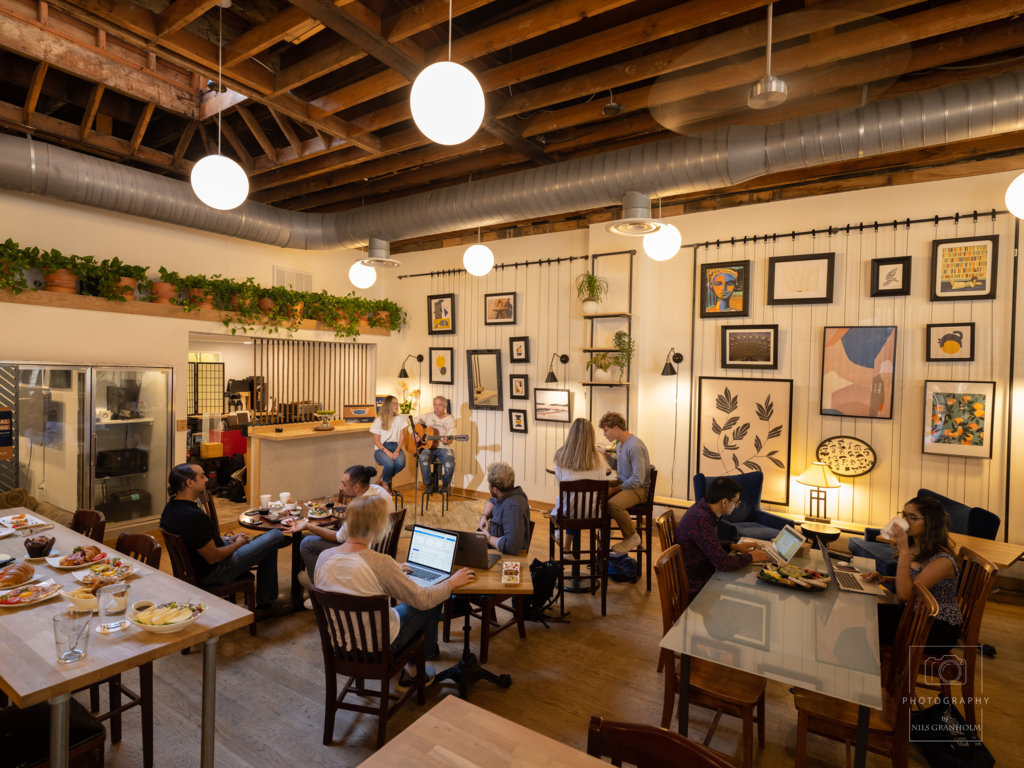
The Community Space Cafe is a classic “third place” model. Its primary goal is to be a low-barrier-to-entry hub for social interaction, local culture, and connection.
| Feature | Design & Function | Revenue Focus |
| Primary Goal | Social gathering, casual interaction, and promoting local culture. | Transactional Sales (High-margin food/drinks), Event Rental fees. |
| Design Priority | Comfort, flexibility, and encouraging serendipitous meetings. | Communal Tables, soft lounge seating, warm atmospheric lighting, and flexible space for events/workshops. |
| Ambiance | Lively, bustling, warm, and inviting. The “ambient noise” is a feature, not a bug. | High customer turnover during peak hours, creating space for new customers and transactions. |
| Team Focus | Creating a welcoming atmosphere, deep product knowledge, and fostering relationships with local patrons and artists. | Maximizing ‘spend per visit’ and generating revenue from food/events. |
This cafe is a cultural anchor. Its success hinges on its ability to integrate with the local community, host events (book clubs, open mics, art exhibits), and offer a sensory experience that encourages people to linger and socialize.
The Critical Difference for Your Project
Choosing between these two models impacts everything, from your lease agreement to your POS system:
- Revenue Model: A Coworking Cafe uses Memberships as its foundation; a Community Cafe uses Transactions.
- Design Trade-Offs: A Community Cafe wants cozy, soft seating that encourages lingering and conversation (even if it’s not ergonomic for a laptop). A Coworking Cafe must invest in ergonomics and infrastructure to justify its membership price.
- The Wi-Fi Question: In a Community Cafe, Wi-Fi is a perk. In a Coworking Cafe, Wi-Fi is the #1 Product.
Conceptualizing Your Vision with Brewverse
Whether your heart is set on being the professional nexus of the neighborhood or its cozy social living room, a strong, differentiated concept is essential.
At Brewverse, we don’t just give you a blueprint; we help you find the soul of your cafe. Our consultation process focuses on:
- Conceptualizing: Defining your core purpose—is it Focus (Coworking) or Fellowship (Community)?
- Menu Engineering: Building a menu that aligns with your model (High-margin grab-and-go for quick transactions, or robust, full-day meals for members).
- Branding: Ensuring your visual identity, voice, and interior design communicate your model instantly to the customer.
- Team Building: Training your staff to deliver the service your model demands, whether it’s specialized tech support for members or superior conversational service for local patrons.
The cafe industry is competitive, but by choosing a clear path—Coworking or Community—and executing it flawlessly, you create the differentiation needed to turn your vision into a sustainable, thriving hub. Let us help you start with that clarity